Guides Knife and fork signals
Knife and fork signals: resting and finished
The quietest conversation at any dinner is between your cutlery and whoever clears the plates. Here is how to say “not yet” and “finished”, the American way and the British way.
By Mr. Ashby, butler, retired. Updated 30 September 2026.
The short answer
Think of your plate as a clock face. Resting, American: knife across the top edge, fork lower down. Resting, British: knife and fork crossed or in an inverted V, fork tines down. Finished: side by side, handles at four o’clock in America, at six o’clock in Britain.
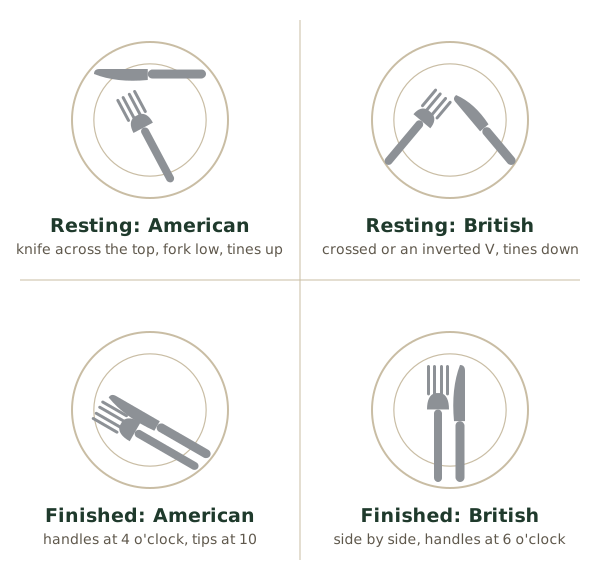
Your knife and fork tell whoever is serving whether you are resting or finished. Get it right and your plate is cleared the moment you are done, and never a moment before. Americans finish at four o’clock, the British at six.
Resting: American
Lay the knife across the top edge of the plate, blade facing in. The fork sits lower down, at an angle, tines up. This says you are pausing to talk, or to drink, and would like to keep your dinner.
Resting: British and Continental
Knife and fork crossed, or in an inverted V near the centre of the plate, fork tines down, handles near eight and four o’clock. Teachers vary on the exact angles. The meaning does not: not yet, thank you.
Finished: American, four o’clock
Side by side, handles at about four o’clock and tips towards ten, knife blade in, fork on the inside.
Finished: British, six o’clock
Side by side, straight up the middle, handles towards you at six o’clock, fork tines up.
The London footmen learned both after an American guest sat for twenty minutes behind an empty plate at four o’clock, waiting for someone to take it. He thought we were being rude. We thought he was still hungry.
Three more quiet signals
- In either country, never push the plate away. The knife and fork have already said it.
- Once a knife, fork or spoon has been used, it rests on a plate. It never goes back on the tablecloth.
- With soup, the spoon rests on the plate beneath the bowl when you pause or finish, not in the bowl.
At the very end, pick up your napkin from the centre and lay it loosely to the left of your plate. Never refold it, and never put it on the plate. For where everything sits before the first course, see The formal table setting, explained.
Questions
What does a knife and fork at four o'clock mean?
In America it means you have finished. Lay them side by side with the handles at about four o'clock and the tips towards ten, knife blade facing in, fork on the inside.
How do the British show they have finished eating?
Knife and fork side by side, straight up the middle of the plate, handles towards you at six o'clock, fork tines up.
Is crossing your knife and fork rude?
No. Crossed, or in an inverted V near the centre of the plate with the fork tines down, is the British and Continental way of saying you are resting, not finished.
Should I push my plate away when I have finished?
Never, in either country. Put your knife and fork in the finished position and leave the plate where it is. That is the whole signal.