Guides Black tie vs black tie optional
Black tie vs black tie optional: what each one means
Two words on an invitation, and a great deal of worry. Here is what black tie, black tie optional and black tie preferred ask of a suit and of a dress, from a butler who answered the question on the telephone for forty years.
By Mr. Ashby, butler, retired. Updated 30 September 2026.
The short answer
Black tie means a tuxedo or a floor-length gown. Black tie optional means the tuxedo is welcome, and a dark suit is perfectly correct. Black tie preferred sits between the two: the host would like tuxedos, and a dark suit is still allowed.
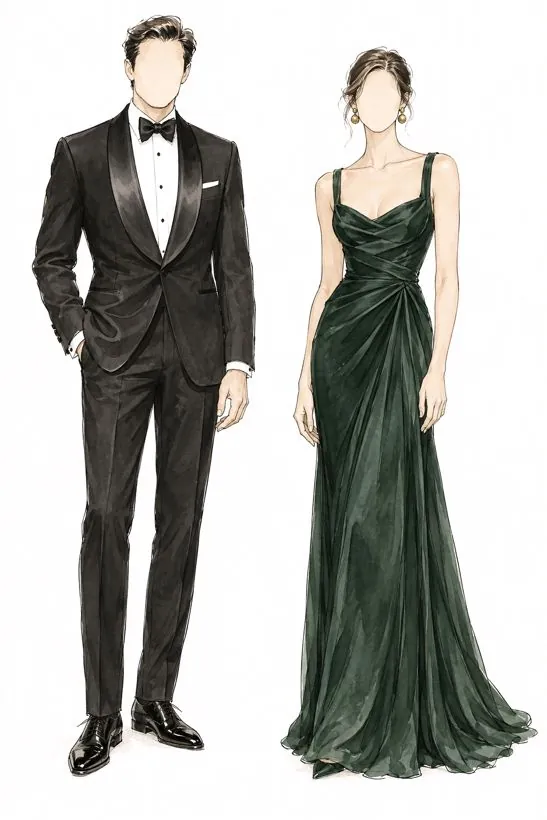
Black tie: the tuxedo and the gown
The invitation is quite specific, which is a kindness. On the suit side: a black dinner jacket (a tuxedo), a formal white shirt with studs and cufflinks, a black bow tie, a cummerbund or waistcoat, and black patent or highly polished shoes. In summer, a white dinner jacket is allowed. In Britain the whole outfit is called a dinner suit.
On the dress side: a floor-length gown, or a very dressy cocktail dress. British hosts expect knee-length or longer, without dramatic slits, and palazzo trousers are quite acceptable.
You will find black tie at galas, evening weddings and formal dinners. It is one rung below white tie, which asks for a tailcoat and is rare enough that the invitation will say so plainly.
Black tie optional: the dark suit is correct
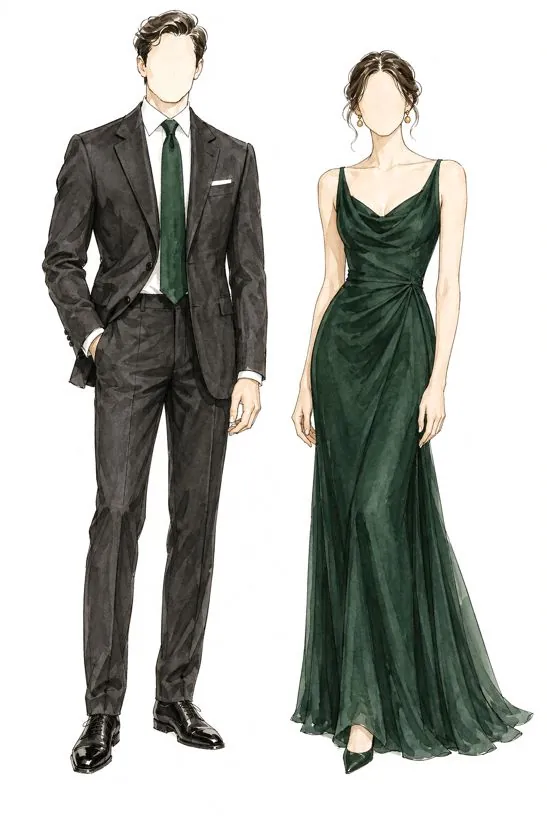
This is mostly an American code, and it means exactly what it says. If you own a tuxedo, wear it. If you do not, a dark suit, a white shirt and a conservative tie are perfectly correct, and nobody at the party should think otherwise. On the dress side: a gown, a cocktail dress, or elegant dressy separates. You will meet it at evening weddings and benefits.
For forty years I answered the Family’s telephone to guests asking what “black tie optional” meant. It was the Family’s favourite phrase and nobody else’s. I always told them the truth, which is that a host would much rather be asked than surprised.
Black tie preferred: optional, with a raised eyebrow
The host would like to see tuxedos and has said so in the politest way available. A dark suit, white shirt and sober tie remain correct, but this is the invitation on which to hire or borrow the tuxedo if you reasonably can. On the dress side, lean towards the long gown rather than the short dress.
When you are not sure which way to lean
- Read the time and the place as well as the code. After six in the evening, lean darker and dressier.
- When in doubt, dress one notch up. A jacket or a tie comes off in ten seconds. You cannot put on what you left at home.
- Still unsure? Ask the host when you reply. It is a perfectly ordinary question.
A word on the bow tie
I tied a great many bow ties in the back hall, including one on a surgeon who could remove an appendix in twenty minutes and could not manage a bow in forty. It is a shoelace knot, tied at your throat. Practise the night before, not in the car.
The whole ladder, from white tie down to casual, is drawn in Dress codes explained.
Questions
Can I wear a dark suit to a black tie optional event?
Yes. Black tie optional means a tuxedo is welcome and a dark suit is perfectly correct. Wear it with a white shirt, a conservative tie and polished shoes.
What is the difference between black tie optional and black tie preferred?
Both allow a dark suit. Black tie preferred tells you the host would like to see tuxedos, so if you own one, or can hire or borrow one without hardship, that is the invitation to wear it.
Can I wear a cocktail dress to a black tie event?
A very dressy one, yes, though a floor-length gown is the classic choice. In Britain dresses are expected to be knee-length or longer, without dramatic slits. Elegant palazzo trousers are quite acceptable.
Can I wear a white dinner jacket to black tie?
In summer, yes. A white dinner jacket with black trousers and a black bow tie is correct black tie for warm-weather and summer evening events.